The Isle: A Deep Dive Into Survival, Dinosaurs, and the Ultimate Prehistoric Experience
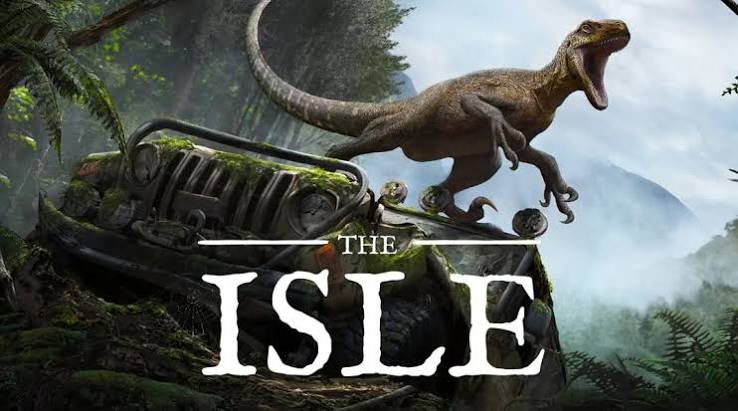
The Isle is a survival game built around one of the most compelling ideas in modern gaming: what would it really be like to survive in a world ruled by dinosaurs? Instead of placing players in the role of a heavily armed hero, the game asks them to become part of a dangerous prehistoric ecosystem where survival depends on patience, awareness, strategy, and understanding the environment.
At first glance, The Isle may appear to be a straightforward dinosaur game. In reality, its design is much more demanding. Players must find food and water, avoid predators, manage threats, grow their creatures, and make careful decisions about when to fight and when to escape. Every movement can have consequences, and even a seemingly safe journey can turn into a struggle for survival.
The appeal of The Isle comes from its atmosphere and its commitment to immersive survival. The game does not constantly tell players what to do. Instead, it encourages experimentation, observation, and learning through experience. This creates a distinctive gameplay loop in which simply staying alive can feel like an achievement.
For dinosaur enthusiasts, survival-game fans, and players who enjoy challenging multiplayer experiences, The Isle offers an unusual combination of exploration, role-playing, competition, and horror. This article explores the game's concept, gameplay systems, dinosaurs, survival mechanics, multiplayer experience, strengths and weaknesses, and overall value.
What Is The Isle?
The Isle is a multiplayer survival game centered around prehistoric creatures. Players take control of dinosaurs and other creatures and attempt to survive in a hostile environment populated by other players.
Unlike conventional survival games, the player's character is not a human survivor. Instead, the entire experience revolves around becoming an animal within the ecosystem.
This fundamental design choice changes how players think about survival.
A typical survival game might ask players to:
- Build a shelter
- Craft weapons
- Collect resources
- Fight enemies
- Explore a map
The Isle focuses on a different set of priorities:
- Finding food
- Locating water
- Avoiding predators
- Hunting prey
- Growing stronger
- Protecting a group
- Understanding animal behavior
- Surviving encounters with other players
The result is a slower and more atmospheric experience.
A player can spend a considerable amount of time simply walking through forests, listening for sounds, searching for food, or looking for signs that another predator is nearby. This can initially feel quiet, but that quietness is an important part of the experience.
The absence of constant action creates tension.
The Core Concept Behind The Isle
The central idea behind The Isle is simple: survival is difficult when you are not at the top of the food chain.
Every creature has strengths and weaknesses. A large predator may have enormous physical power but require substantial amounts of food. A smaller dinosaur may be faster and more agile but vulnerable in direct combat.
This creates an ecosystem where survival depends on understanding your role.
Survival Is the Main Objective
There are no traditional objectives forcing players through a fixed campaign.
Instead, survival itself becomes the objective.
A successful session might involve:
- Selecting a creature.
- Searching for food.
- Finding a reliable water source.
- Avoiding dangerous players.
- Growing your dinosaur.
- Finding a group.
- Hunting successfully.
- Surviving long enough to become a powerful adult.
This approach makes the game feel more like a survival simulation than a conventional action game.
The Importance of Growth
One of the most interesting features of dinosaur survival gameplay is growth.
Starting as a vulnerable young creature can be intimidating. Small dinosaurs have limited abilities and are often easy targets for larger predators.
As the creature grows, its capabilities improve.
Growth provides a strong sense of progression because players become emotionally attached to the animal they control. Losing a mature dinosaur after investing significant time can therefore be extremely frustrating.
At the same time, this risk makes survival meaningful.
If death had no consequences, players would have little reason to be cautious.
The possibility of losing hours of progress encourages players to:
- Listen carefully
- Watch their surroundings
- Avoid unnecessary fights
- Travel intelligently
- Choose food carefully
- Stay near allies
- Learn predator behavior
The Dinosaur Experience
The dinosaur roster is one of The Isle's biggest attractions.
Players can experience the world from different perspectives depending on which creature they choose. Herbivores, carnivores, and other prehistoric animals can produce dramatically different gameplay styles.
Herbivores
Herbivorous creatures generally focus on finding vegetation and surviving encounters with predators.
Playing a herbivore can be surprisingly engaging because it emphasizes awareness and defensive behavior.
A herbivore player needs to think about:
- Where predators may be hiding
- Where food is available
- How close the nearest water source is
- Whether traveling alone is safe
- When to run
- Whether standing with a group provides protection
Some herbivores can become extremely dangerous when fully grown, especially when defending themselves or protecting others.
Carnivores
Carnivores provide a completely different experience.
Instead of searching for plants, carnivorous players must locate prey and decide when hunting is worth the risk.
Hunting is not simply about attacking the nearest creature.
Players must consider:
- Target size
- Target speed
- Group numbers
- Terrain
- Stamina
- Distance from water
- Potential third-party predators
A failed hunt can leave a predator exhausted and vulnerable.
This creates an interesting risk-reward system.
A player may see potential prey but decide not to attack because the target is too dangerous.
That decision is an important part of successful gameplay.
Hunting Mechanics
Hunting is one of the most exciting aspects of The Isle.
A successful hunt requires more than raw strength.
Tracking
Players need to identify where prey may be located.
Environmental clues can help reveal the presence of other creatures.
Experienced players learn to pay attention to:
- Sounds
- Movement
- Tracks
- Bodies
- Water sources
- Common travel routes
This creates a sense of detective work.
Choosing the Right Target
A strong predator does not necessarily attack everything it sees.
Good hunters identify vulnerable targets.
For example, a lone juvenile may be easier to catch than a large adult surrounded by several allies.
This makes hunting partly a strategic activity.
Ambushes
Ambushes can be more effective than direct attacks.
A predator hiding near vegetation or terrain can wait for an opportunity.
This is particularly effective when:
- The target is distracted
- The target is drinking
- The target is separated from its group
- The target is moving through restricted terrain
Patience often produces better results than aggression.
The Importance of Water
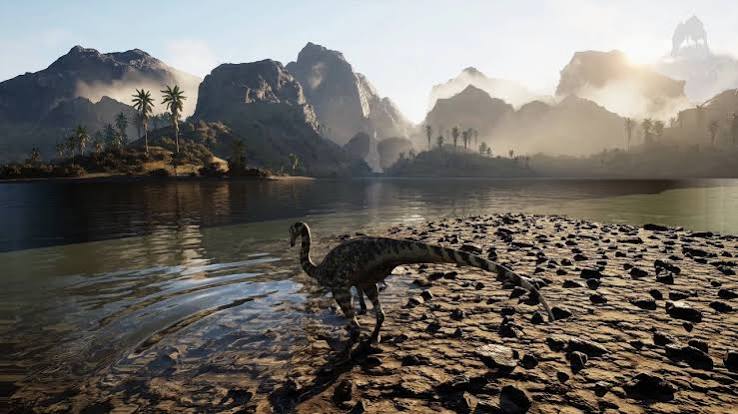
Water is one of the most important resources in a survival ecosystem.
Players cannot simply ignore hydration.
Water sources can become dangerous locations because multiple players naturally converge around them.
This creates a fascinating contradiction.
Water is necessary for survival, but it can also be one of the most dangerous places on the map.
A player approaching a lake or river must consider:
- Is another predator nearby?
- Is the area crowded?
- Can I escape quickly?
- Is the opposite side safer?
- Can I drink without exposing myself?
Experienced players learn that survival is often about managing risk rather than eliminating it.
The Map and Exploration
The environment is another major part of The Isle.
Large forests, rivers, open spaces, hills, and other natural environments create different tactical situations.
Forests
Forests can provide concealment.
However, they can also reduce visibility.
This creates advantages and disadvantages.
Advantages
- Better camouflage
- Ambush opportunities
- Reduced visibility from distant predators
Disadvantages
- Harder navigation
- Limited visibility
- Greater chance of unexpected encounters
Open Areas
Open areas provide better visibility.
Players can see approaching threats more easily.
However, open terrain also makes hiding difficult.
A creature caught in an exposed area may have fewer opportunities to escape.
Multiplayer Survival
The Isle becomes significantly more interesting when other players are involved.
Unlike predictable computer-controlled enemies, human players are unpredictable.
A player may:
- Attack immediately
- Ignore you
- Follow you
- Pretend to cooperate
- Call other players
- Protect their group
- Betray you
This uncertainty creates natural tension.
Social Groups
Some players prefer solitude.
Others form large groups.
Both approaches have advantages.
Advantages of Groups
- Increased protection
- Better hunting opportunities
- Shared information
- Greater ability to defend territory
- Increased chance of surviving attacks
Disadvantages
- Competition for food
- More noise
- Increased visibility
- Potential internal conflicts
- Greater resource requirements
Playing in a group can be powerful, but it also creates responsibility.
Communication and Trust
Trust is an interesting part of multiplayer survival.
Players may cooperate with strangers, but there is no guarantee that cooperation will continue.
A friendly player today might become an enemy tomorrow.
This creates social gameplay that feels organic.
Some players establish long-term communities, while others prefer temporary alliances.
The result is a world where social relationships can become just as important as physical strength.
Combat in The Isle
Combat is dangerous and should not be treated like a traditional action game.
A fight can cause serious consequences.
Even if you defeat an opponent, you may suffer injuries that make you vulnerable to another predator.
This encourages players to evaluate every battle.
When Should You Fight?
A good rule is to ask:
- Do I need this fight?
- Can I win?
- What happens if another predator arrives?
- Am I injured?
- Do I have enough stamina?
- Is there an escape route?
Winning a battle is not always the same as making the correct decision.
Sometimes the smartest move is to leave.
The Role of Sound
Sound is extremely important.
Players cannot rely only on what they can see.
Listening can provide information about nearby creatures.
Sounds may reveal:
- Movement
- Calls
- Nearby predators
- Potential prey
- Group activity
A player who constantly runs without listening can miss important warnings.
Experienced players often use sound as an early-warning system.
Why The Isle Feels Like a Horror Game
Although The Isle is primarily a survival experience, it often produces horror-like tension.
The fear comes from uncertainty.
Imagine walking through a dark forest while knowing that a large predator could be nearby.
You may hear something.
You stop.
Nothing happens.
You continue walking.
Then you hear another sound.
That psychological tension is one of the game's greatest strengths.
The player does not need scripted jump scares.
The environment creates fear naturally.
Beginner Tips for The Isle
New players often struggle because the game does not behave like a traditional action title.
1. Learn Your Creature
Understand:
- Speed
- Stamina
- Food requirements
- Strengths
- Weaknesses
- Growth expectations
Knowing your creature is essential.
2. Avoid Unnecessary Combat
Do not fight simply because you can.
Combat always carries risk.
3. Stay Alert Near Water
Water sources are valuable but dangerous.
Approach carefully and observe the surroundings before committing.
4. Learn the Map
Understanding geography can save your life.
Remember important:
- Rivers
- Lakes
- Forests
- Open fields
- Safe routes
5. Use Sound
Do not play with the volume completely muted.
Sound can provide critical information.
6. Be Patient
The Isle rewards patience.
Running everywhere can attract attention and waste stamina.
Sometimes the best strategy is simply to wait.
The Isle for Dinosaur Fans
For dinosaur enthusiasts, the game's biggest attraction is obvious.
Players can experience the world from the perspective of prehistoric creatures rather than simply fighting them.
This creates a stronger connection with dinosaur behavior.
Instead of treating dinosaurs as enemies, the game makes players think about:
- Territory
- Hunting
- Herds
- Predators
- Prey
- Migration
- Survival
This makes the experience especially appealing to players who enjoy natural-history themes.
The Isle for Casual Players
Casual players should understand that The Isle is not necessarily designed around instant gratification.
A typical session may include long periods of exploration and survival.
For players who enjoy relaxed exploration, this can be rewarding.
For players who want constant action, it may be frustrating.
The ideal audience is someone who enjoys:
- Immersion
- Exploration
- Strategy
- Multiplayer interaction
- Slow progression
- Survival mechanics
The Isle for Hardcore Players
Hardcore survival fans may appreciate the game's consequences.
A mature creature represents time and effort.
Keeping that creature alive becomes a personal achievement.
Hardcore players can challenge themselves by:
- Playing solo
- Avoiding unnecessary combat
- Surviving for long periods
- Hunting stronger opponents
- Joining competitive groups
- Learning advanced movement techniques
This creates a significant skill ceiling.
The Future of The Isle
The long-term appeal of a game like The Isle depends heavily on continued development.
Players naturally expect:
- New creatures
- Improved animations
- Better environments
- New gameplay systems
- Performance improvements
- Expanded survival mechanics
- Stronger multiplayer infrastructure
The concept itself has enormous potential.
The prehistoric survival genre remains relatively specialized, meaning a well-developed dinosaur survival game can maintain a dedicated audience.
Why The Isle Remains Interesting
The strongest argument for The Isle is that it creates stories naturally.
A typical game might give players a scripted narrative.
The Isle allows players to create their own.
One player may remember:
- Surviving a predator attack
- Finding water after a long journey
- Growing from a vulnerable juvenile
- Joining a herd
- Successfully hunting a dangerous opponent
- Losing a beloved dinosaur
- Escaping an ambush
These moments are memorable because they are created by the player's decisions.
Expert Rating
CategoryRatingGameplay9/10Immersion9.5/10Dinosaur Experience9.5/10Multiplayer8.5/10Atmosphere9.5/10Combat8.5/10Exploration9/10Replay Value9/10Accessibility7/10Overall9/10
The Isle earns a 9/10 overall rating for its unique concept, atmosphere, multiplayer survival mechanics, and strong dinosaur fantasy. Its biggest weaknesses are its learning curve, slow progression, and potentially frustrating consequences for inexperienced players.
Who Should Play The Isle?
The game is particularly suitable for players who enjoy:
- Dinosaur games
- Survival games
- Multiplayer sandboxes
- Open-world exploration
- Animal simulation
- Competitive gameplay
- Atmospheric experiences
- Strategic combat
- Slow-burn gameplay
It may be less suitable for players who prefer:
- Fast action
- Short matches
- Simple objectives
- Casual progression
- Constant rewards
Frequently Asked Questions
What is The Isle?
The Isle is a multiplayer survival game where players control prehistoric creatures and attempt to survive in a dangerous ecosystem.
Is The Isle a dinosaur game?
Yes. Dinosaurs and prehistoric creatures are central to the gameplay experience.
Is The Isle multiplayer?
Yes. Multiplayer interaction is an important part of the survival experience.
Is The Isle difficult?
It can be difficult, particularly for beginners. The game requires patience, environmental awareness, and knowledge of creature abilities.
Why is survival important in The Isle?
Survival provides the main sense of progression. Growing a creature and keeping it alive gives players a meaningful long-term objective.
Is combat important?
Combat is important, but fighting constantly is usually not the safest strategy. Survival often depends on knowing when to avoid combat.
Is The Isle good for dinosaur fans?
Yes. Its focus on dinosaur behavior and survival makes it particularly attractive to dinosaur enthusiasts.
Does The Isle require patience?
Definitely. Growth, exploration, hunting, and survival can all take time.
Final Verdict
The Isle is a distinctive survival experience that succeeds because it takes a familiar concept and approaches it from an unusual perspective. Instead of asking players to build a fortress and fight waves of enemies, it places them inside a prehistoric ecosystem where every creature has a role.
Its greatest strength is immersion.
Walking through a forest as a young dinosaur, searching for food while listening for predators, creates a level of tension that traditional survival games rarely reproduce. The threat does not need to appear constantly. The possibility of danger is enough.
The game also demonstrates why meaningful consequences can make gameplay more exciting. Growing a creature takes time, and losing it can hurt. Yet that risk is exactly what makes successful survival satisfying.
The Isle is not perfect. Its slower pace, learning curve, demanding survival mechanics, and potentially frustrating multiplayer interactions will not appeal to everyone. Some players may want more immediate action, while others may find repeated eating, drinking, traveling, and growing somewhat repetitive.
However, for players who enjoy immersive survival, dinosaurs, exploration, strategy, and unpredictable multiplayer encounters, The Isle offers something genuinely different.
Ultimately, The Isle is best understood not simply as a dinosaur game, but as a survival simulation built around the idea of becoming part of an ecosystem. It rewards patience, awareness, adaptation, and careful decision-making. Its most memorable moments are rarely scripted. They emerge naturally from the choices players make and the unpredictable behavior of other creatures.